Have you ever been to a funeral or memorial service? The
grieving family and friends have their attention divided between holding back
their inner sobs while trying to relate to others who are gathered to share
their memories. The harmony of quivering
voices overlying a solemn code of conduct gets punctuated by bouts of laughter
from the telling of funny anecdotes. I
suspect the comical stories are tacitly required so that participants have some
sanctioned relief from the somber mood.
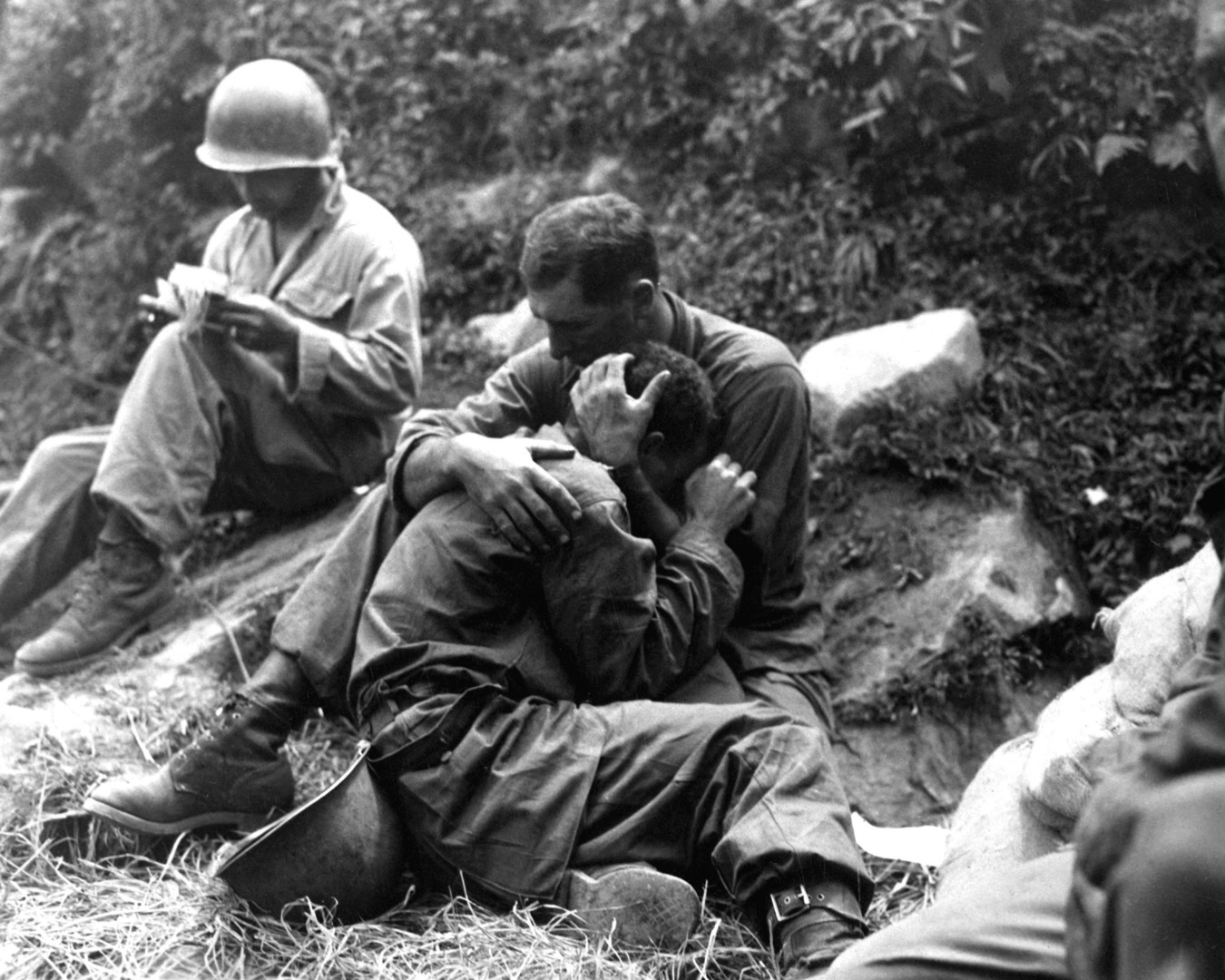
Death is nonnegotiable in its interruption of our
lives. Unthinking routines are
disturbed, backroom beliefs are laid bare in the light of self-reflection, and
our values have their own “judgment day.”
The sheer fact of death (not many facts have such power) causes us to
wonder about the meaning we place in everyday events and things. Does it really matter if I get a new pair of
shoes or a smartphone? Does my job make
me feel meaningfully productive? Are my relationships as deep and healthy as
they could be? Would anyone really care if I died? Have I lived well? And simply, “How do I cope with Uncertainty?”
All of these questions are important to ask, and their lack
of immediate answers often frustrates grievers.
So, in an effort to outwit death, the finality of the fact is stolen. Tales are told of an unending ego, mightier
than the stars who can only burn bright for so many billions of years. Pfft! In the burying of those questions, the
opportunity for transformation is missed.
The transformative potential is projected on the deceased so that they
can be resurrected as a disembodied being.
To learn all that death has to teach us is like going to a school of
wisdom. Radical reorientations of values
and lifestyles can be accomplished after just one semester. But Life is always providing us with more
semesters, free of charge!
I want to come back to where I began in imagining the grief
and potency that death of a close friend or family member has on those who are
experiencing it first-hand. The sorrow
feels so personal, despite seeing the pain in everyone else’s eyes. Intellectually, you know otherwise, but
emotionally, it feels as if a madman called Life came into your home and shot
up the place. Sure, others were
wounded. But, you! You
took a bullet straight into the heart.
There is no surgeon skilled enough to extricate that bullet. Will your heart dare to beat again? Other people will move on, but will you? You share your sadness and expose your
fragility because what else can you do? If you don’t, people wonder if “you’re ok”
(meaning, “do you need 24/7 psychiatric care?”). So, you show your grief to let others know
that you are dealing with your loss, even if you doubt the usefulness of such a
display. Numbness may even begin to set
it. There’s a complete disconnection
from your life and all its unsettled activity that nips at your flesh. No amount of tears can drown your grief.
Stop there now.
Wallow in those imagined feelings for some moments.

I want you to generalize that state of being. Explode your feelings outward and cover all
of humanity. People all over the world
are experiencing these feelings of isolation and sorrow right now. Their pain is
just as real as yours. Their loved ones
were just as meaningful to them as yours are to you. Their cries are full of just as much anguish.
We are educated not to generalize because it leads to distortions
in our understandings about the world.
All white people are imperialists.
All Americans support war. All
Thais like spicy food. All educated
people are smart. All expensive restaurants have great food. Despite how
popular these descriptions are among a group, we learn to be more effortful in
not generalizing characteristics and/or assumptions to people who ostensibly
belong to that group. The next time you
lay down your credit card for the bill at the three-dollar sign restaurant, you
may be wishing you had just gone to the nearest taqueria instead. Generalizing, just like anthropomorphizing,
can lead to all kinds of false impressions.
The grape vine whose “limbs” I severed a couple of weeks back probably
did not feel the pain that I imagined it did.
But, people are all quite similar, no matter how much we
focus on what separates us as individuals and groups of individuals. “Those Africans dying of AIDS” are people who
are experiencing an endless chain of tragic losses. Their grief is no less debilitating. The Iraqi families who have had their lives
blown apart by shrapnel suffer daily not just from their losses, but also from
the knowledge that those deaths were preventable. Soldiers’ families are no less caught in this
cycle of misery.
Indeed, you know all of this intellectually, but do you understand
it emotionally? Politicians and celebrities who suddenly become outspoken about
a social/medical issue when a catastrophe strikes their families speak to this
division in understanding. They were not
intellectually ignorant about pesticide-caused birth defects, but they were
emotionally ignorant. They did not care
that the laborers picking their strawberries were not properly protected from
exposure. The world has been made aware
of the dangers that coal miners face, but we haven’t changed our energy
sourcing patterns. We know about poverty
and we know that much of the world lacks access to healthy living standards,
but the problem continues to worsen.
This is not because we do not know about these issues; it’s because we
don’t care enough to find out why.
If a fundamental shift in your personal life were needed so
that your loved one didn’t die, would you make that change? How would you react if the only way to keep
your loved one alive was to get me to reduce my constant use of plastic
disposable water bottles? Would you urge
me to do so or would that be “too much work” and not worth it? In other words, your loved one dying was a
fair price to pay for my continued convenience of using those bottles.
It seems barbaric to put it this way, but that’s pretty much
how it works, just on a larger scale.
There are proposals for a better functioning social system in which
people are properly fed, housed, and educated.
Crime, war, and poverty are not intractable problems of humanity. They survive because of your terrifying
beliefs about “human nature” (with you and those you know as the exceptions to this monstrous nature, of
course!). Examine the science about
human social behavior. Notice how adaptable
humans are, and notice what factors contribute most to our well being. By
ignoring the problem and remaining steadfastly ignorant, you are increasing the
chances that you or someone you love will be the next victim of a stupidly
designed social system. And when your
grief overwhelms you because “something could have been done to avoid the
tragedy” just remember that they, like you perhaps, didn’t have time or
interest to solve such problems. Your despair
was not theirs, so it was not their concern.
As Helen Keller said, “It is hard to interest those who have everything
in those who have nothing.” Or more bluntly, it is hard to make other people's problems matter to you.
We cannot wait until we have all experienced every
preventable human-created disaster, so that is why we must generalize our
emotional experiences. Being oppressed,
losing a loved one, witnessing an injustice, feeling cheated, and being hurt
are experiences we have all had. The
specific circumstances were different, but the emotional experiences can be
generalized. As we get better at that, the choice between earning
interest vs. making sure no one goes without food will be a no-brainer. We will naturally act towards the greater good, not because of state compulsion, but because our hearts demand it.
